
Falls County Criminal History Checks
Begin with the event, not with a broad name search. Falls County felony files are held by the District Clerk. Class A and B misdemeanor files generally run through the County Clerk. A city court keeps its own fine-only cases, and the Sheriff’s Office or the arresting police department keeps the first incident record. Booking data sits with the Falls County Jail. The Texas Department of Public Safety keeps the statewide criminal-history repository, but its public product is a limited conviction and deferred-adjudication view.
Use a full legal name, any known spelling variants, a date of birth when the official channel permits it, and a narrow date range. A case number, incident number, booking number, or ticket number is better than a name alone. These steps keep a Falls County criminal record check tied to the correct person and event:
- Decide whether the needed item is a booking, incident report, court case, warrant status, or statewide record.
- Start with the Falls County office or city agency that created or filed that item.
- Use the clerk counter, phone line, public terminal, posted docket, or written request that fits the record.
- Compare the Falls County result with DPS only when a statewide conviction or personal record review is relevant.
- Order a certified copy from the clerk when the document itself, rather than a search result, must be verified.
No One-Box Falls Criminal Search
Falls County has no single public criminal-name portal. The District Clerk posts dated 82nd District Court criminal dockets, but each PDF is a hearing calendar, not a complete case database. The County Clerk provides terminals and staff searches. The jail has no public web roster. The statewide re:SearchTX platform is also a weak criminal fallback because the Texas Judicial Council reported that its large document collection excludes criminal case records.
The practical route changes with the record. The official Falls County homepage identifies the courthouse offices and their current public contacts.
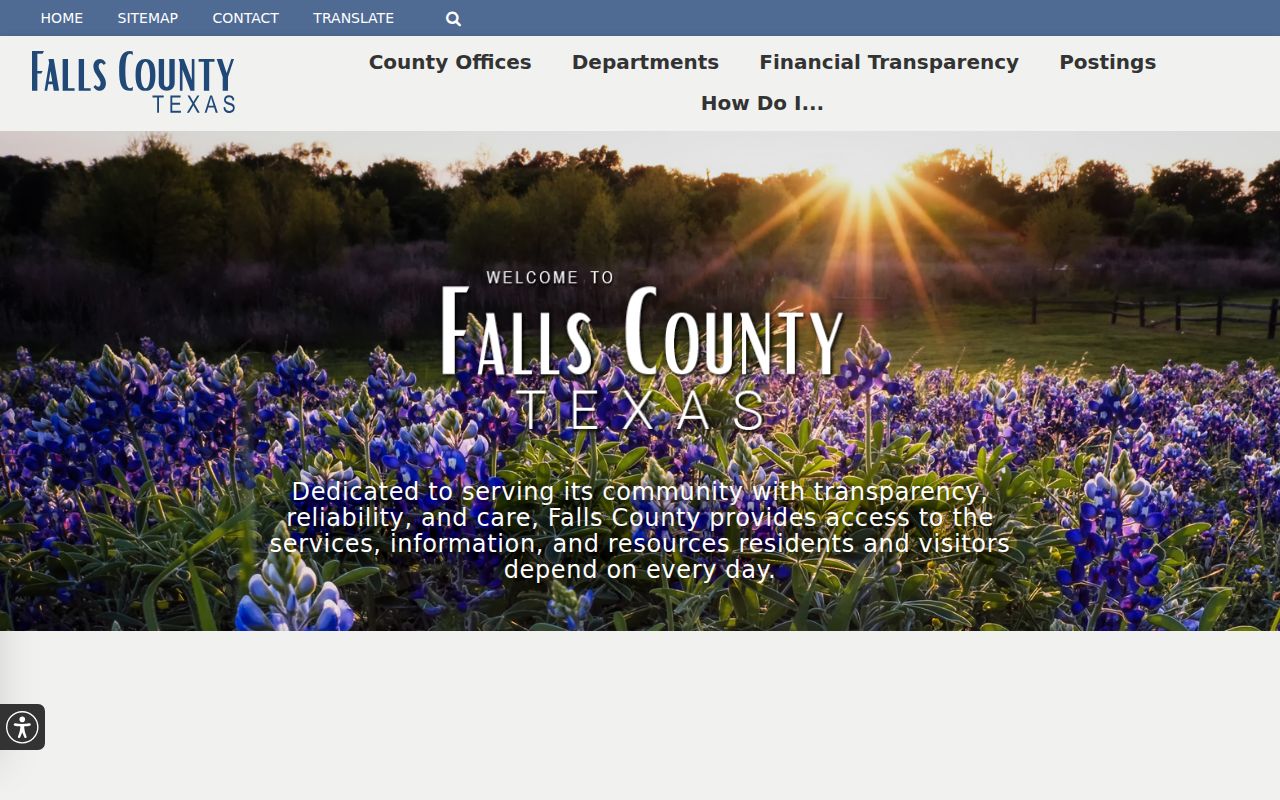
The courthouse view marks the hub for clerk, court, prosecutor, and supervision files, while sheriff and jail records remain at the separate Highway 6 campus.
| Need | First official channel | Useful fallback |
|---|---|---|
| Felony case | District Clerk, Room 301 | Posted 82nd District docket, then phone or counter |
| Class A or B case | County Clerk, Room 202 | Public terminal or written search |
| Current custody | Falls County Jail phone | Sheriff counter or precise public-information request |
| City ticket | Issuing municipal or justice court | Call, mail, or counter route |
| State record | Texas DPS public or personal-review channel | Originating Falls County clerk for source documents |
Official Background Checks in Texas
The Texas DPS Crime Records Division maintains the central Computerized Criminal History system. Its public, account-based Conviction Name Search costs one search credit for each query, including a no-match result. The live price is $1 per online credit. Card funding adds 2.25 percent per credit and 25 cents per transaction. A mailed CR-42 name check is a separate $10 service. Public name results are not fingerprint-confirmed and can associate people who share similar identifiers.
The DPS conviction search shows the official account gateway used for that limited public product.
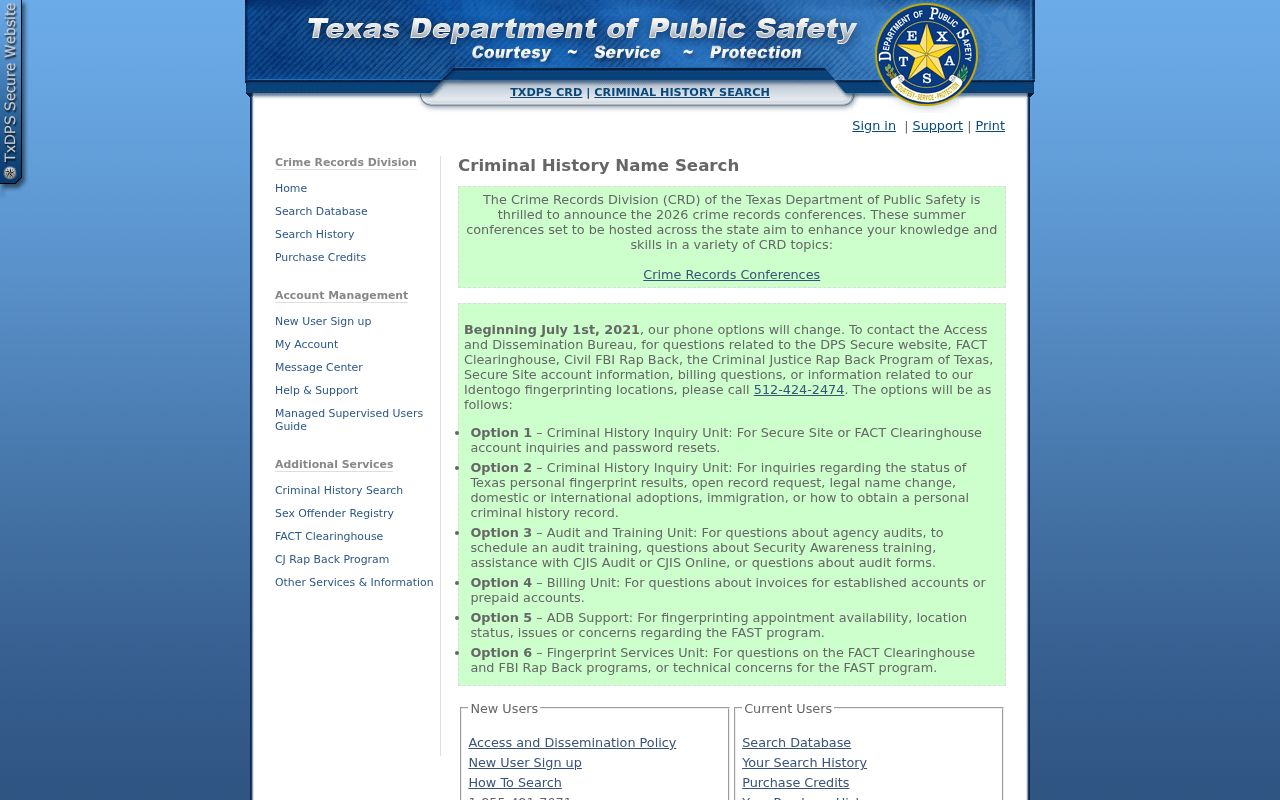
The account screen is a reminder that buying a name search is not the same as obtaining an identity-linked personal review.
For one’s own more complete Texas record, use DPS personal review and fingerprints captured through FAST, the Fingerprint Applicant Services of Texas, at an IdentoGO location. No permanent Falls County enrollment center was confirmed. Search the live locator by ZIP before travel. The FBI Identity History Summary is a different, subject-only federal product. It does not certify that every Falls County file is complete.
Falls Criminal Records by Fingerprint
Fingerprint review is the stronger path when identity matters. The authorizing agency supplies a service code. That code determines where the prints and result go, so using the wrong one can misroute the request. Enrollment asks for the service code, legal identity and contact data, a site and appointment, and payment. Verify the offered location at the time of booking because mobile and temporary sites can change.
The official FAST and IdentoGO enrollment portal begins with the service-code route.
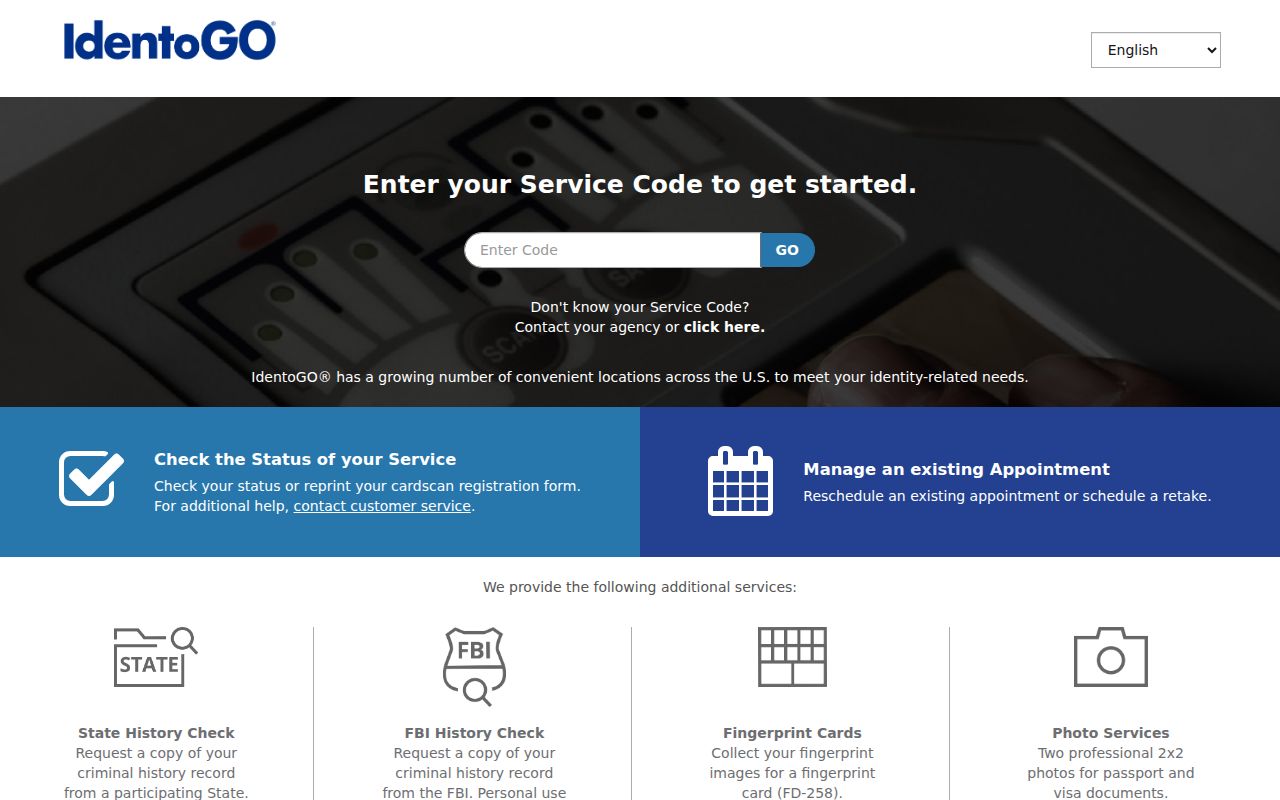
The enrollment screen supports identity-based review, not a public people search.
The FBI Electronic Departmental Order portal handles requests for a person’s own federal Identity History Summary.
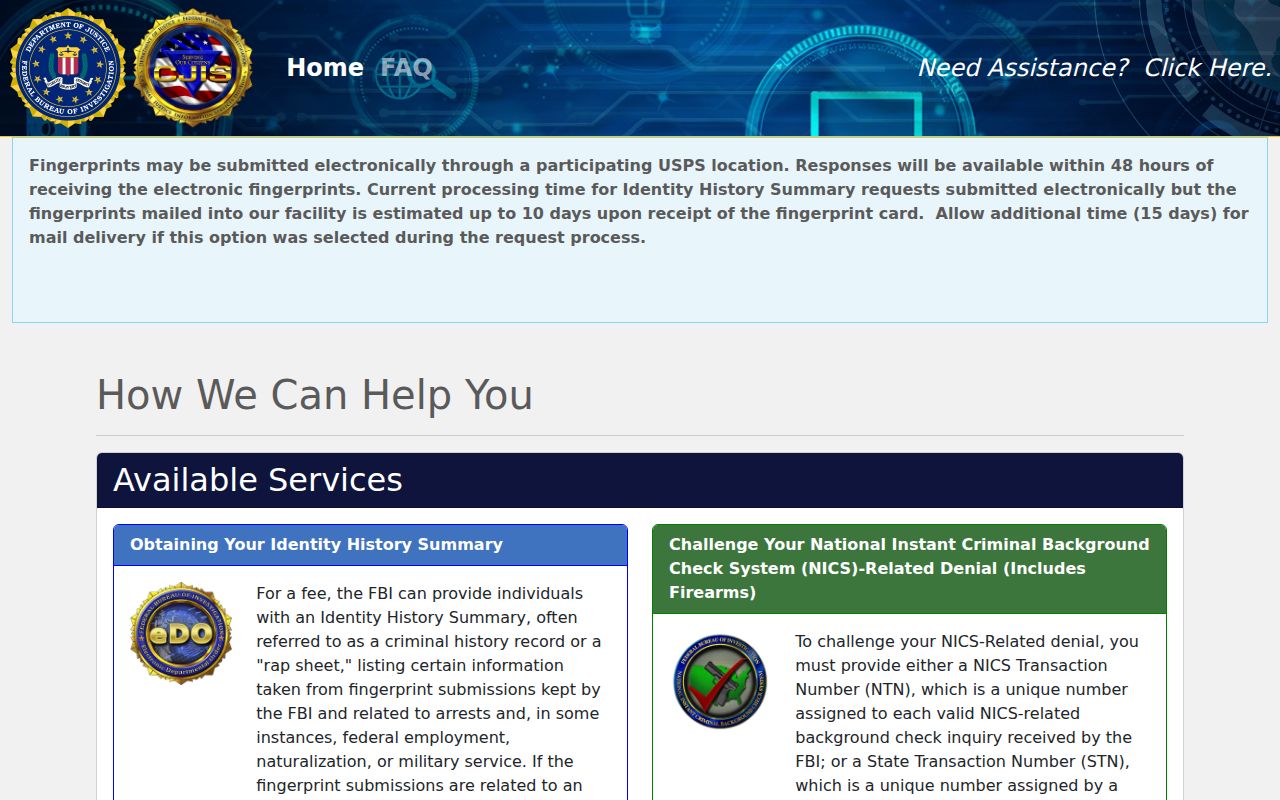
Its federal scope differs from Falls County clerk files and the Texas repository, so the products should not be treated as substitutes.
Kinds of Criminal Records
Each Falls County record answers a different question. An incident report describes what an agency received or investigated. An arrest and booking record documents custody processing. A charging instrument starts or advances prosecution. The clerk’s court file tracks settings, pleas, orders, judgment, sentence, and costs. A DPS history links reportable arrest and disposition cycles, while warrant, custody, supervision, and registry records have their own custodians.
These terms help separate the most common Falls County criminal records:
- Booking record
- The jail’s intake and release record for one custody episode. It does not prove guilt.
- Information
- A prosecutor-filed charging instrument used where Texas law permits filing without a grand-jury indictment.
- Indictment
- A grand jury’s written accusation after a true bill. It is not a verdict.
- Disposition
- The outcome of one charge, such as conviction, dismissal, acquittal, or deferred adjudication.
- Community supervision
- The Texas term for court-ordered probation-like supervision.
Falls County Clerk Record Searches
Room 202 is the practical counter for Falls County Class A and B misdemeanor files. The County Clerk offers free self-research on public terminals during business hours. A clerk-performed search costs $5 per person. Copies cost $1 per page, and certification adds $5 per document. A mail request should name the person, define the search period and desired result, include payment, and provide a self-addressed envelope.
The official County Clerk page publishes the office routes, fees, hours, and terminal access.
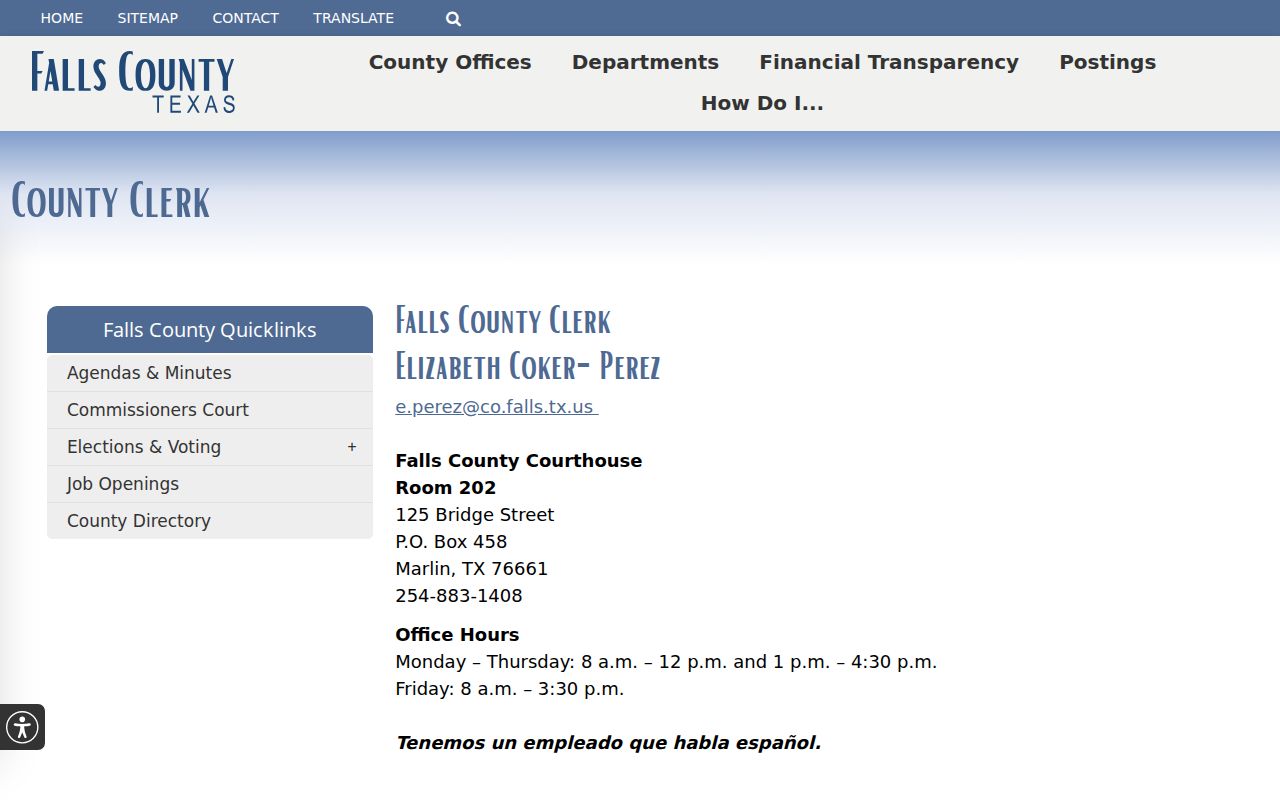
The captured page supports a useful choice: search the terminal personally, ask staff to search, or send a focused written request.
| County Clerk service | Published amount |
|---|---|
| Public terminal self-research | No search fee stated |
| Clerk-performed person search | $5 per person |
| Copy | $1 per page |
| Certification | $5 per document in addition to copy cost |
Falls County Criminal Records: What They Contain
A Texas CCH record is built around identity and arrest cycles. A Falls County court file is built around a case number. A Falls County jail file is built around a booking number. That difference explains why the same Falls County event can appear with different dates, charge labels, and status fields across sources. The arrest charge may change when a prosecutor files an information or a grand jury returns an indictment.
| Name and identifiers | Legal names, aliases, birth data, physical descriptors, SID or FBI identifiers where the product lawfully shows them. |
|---|---|
| Arrest and booking | Agency, arrest date, tracking number, booking data, initial charges, bond, and release or transfer status. |
| Case details | Case number, court, filing and setting dates, attorney, docket events, charging instrument, and case status. |
| Disposition | Conviction, dismissal, acquittal, deferred adjudication, or another outcome for each filed count. |
| Sentence | Jail or prison term, fine, costs, restitution, and supervision terms where public. |
| Limits | Protected identifiers, juvenile data, victim details, sealed files, and nondisclosed or expunged material may be absent. |
Falls Arrests, Cases, and Rap Sheets
A booking entry, a court case, and a DPS rap sheet are three records. The jail entry proves custody processing. It does not show the final decision on every charge. The court file explains what prosecutors filed and what the judge or jury decided. DPS receives reportable events from agencies and clerks, then releases only the slice allowed for the product being used.
Use the Falls County court case lookup when the filed charge, plea, order, judgment, or sentence matters. For current custody, begin with the jail. When a statewide entry conflicts with a Falls County disposition, obtain the source document before assuming either record is complete.
The Falls County office directory shows the separate court and justice contacts that make this record flow possible.
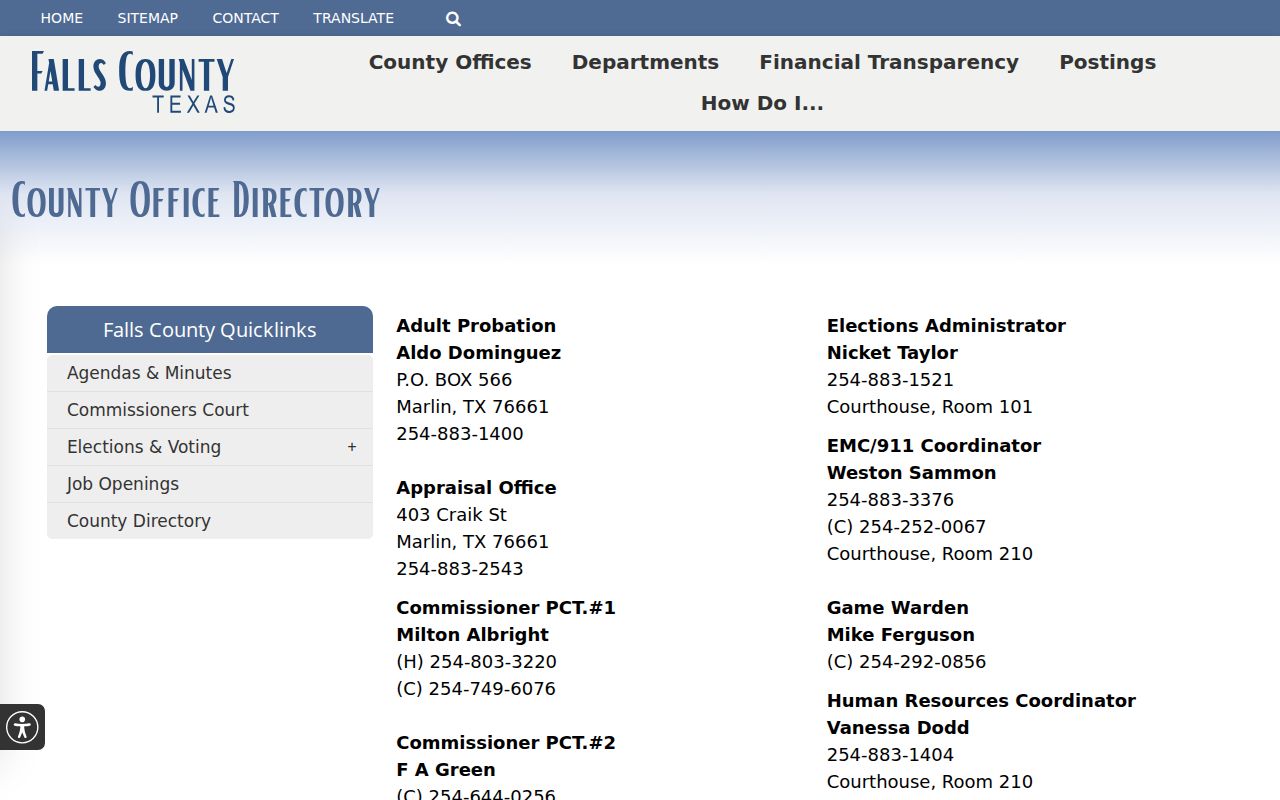
The directory helps route a file to the District Clerk, County Clerk, justice court, prosecutor, jail, or supervision office without blurring their roles.
Texas Public Access Laws
The Texas Public Information Act allows a request for existing government records, but it does not require an office to answer questions, create a list, or conduct legal research. A precise request should name the incident, date range, location, agency, and document sought. Court clerks can apply their own statutory search, copy, and certification fees. Law-enforcement, juvenile, privacy, and criminal-history rules can restrict all or part of a responsive record.
Key Texas laws:
Government Code Chapter 552 grants access to public information while preserving exceptions, including the law-enforcement rule in Section 552.108.
Government Code Chapter 411 controls DPS criminal-history confidentiality, the public conviction site, and orders of nondisclosure.
Code of Criminal Procedure Chapter 55A sets the current Texas expunction routes and procedures.
Code of Criminal Procedure Chapter 62 governs sex-offender registration and public registry information.
Falls County Jail Record Gaps
The Falls County Jail does not publish an official web roster, booking blotter, current capacity, or public sample profile. Call the jail with the person’s full name and an approximate booking date. Ask whether the person is currently held and how to request releasable booking information. Then identify the arresting agency for the incident report and the proper clerk for any filed case. The Falls County arrest search routes explain that fallback chain in more depth.
A Sheriff Connect app by OCV has been announced, but its current public feature list was not verified. Do not assume it contains inmate or warrant lookup. The county’s Sheriff and jail page is the official starting point for live contacts. State repository guidance cannot replace a current-custody call to the Falls County Jail.
Restricted, Sealed & Expunged Records
Redaction hides protected fields in an otherwise releasable file. An order of nondisclosure restricts public release of qualifying criminal-history information but leaves records available to criminal-justice and other authorized bodies. Expunction is broader: a court order directs return or destruction of qualifying arrest records under Chapter 55A. Juvenile files, victim details, active investigative material, biometric data, and confidential addresses may also be restricted.
Eligibility for Falls County expunction is tied to the whole arrest transaction. Acquittal, pardon or actual innocence, qualifying release without a final conviction, certain dismissals, and designated specialty-court outcomes are among the statutory routes. Waiting thresholds without prosecutor certification can be 180 days for a Class C arrest, one year for Class A or B, and three years for a felony or an arrest transaction involving a felony. A wait alone never guarantees relief.
Correcting Falls County Criminal History
If a dismissal appears in the Falls County court file but not in DPS, first obtain the filed disposition from the clerk. Then use fingerprint-based personal review and the DPS challenge process. The Falls County clerk controls its source file, but it cannot simply edit the state repository on request. A missing disposition may reflect reporting lag, an unmatched tracking number, or another data issue.
The Texas DPS criminal-history access page separates public name searches from personal review and correction.
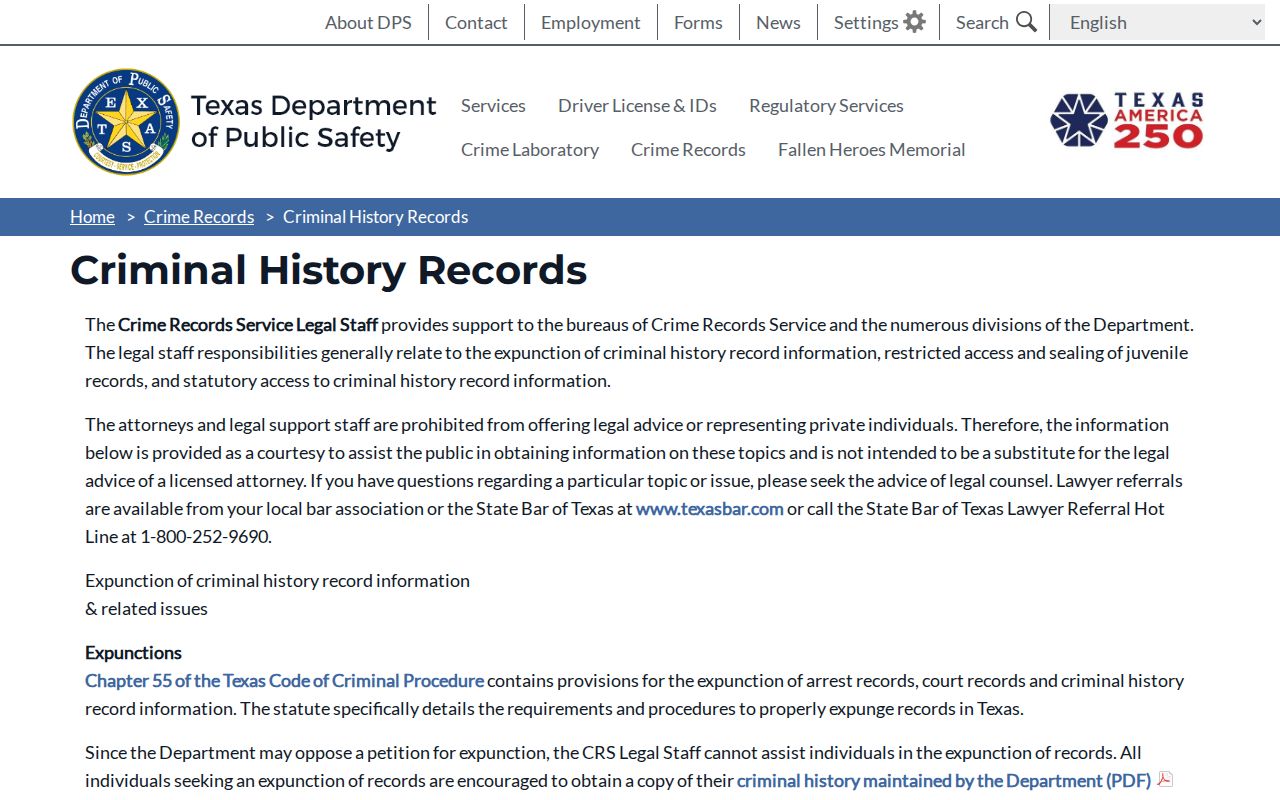
DPS personal review is the proper identity-confirmed starting point for testing whether the statewide entry matches one’s own prints.
Expunction is not a shortcut for a reporting error. When the Falls County record is correct but still public, determine whether Chapter 55A or an order of nondisclosure applies, then confirm filing requirements with the Falls County District Clerk or the court that handled the case.
Falls County Warrants and Supervision
Falls County publishes no active-warrant name search and Texas has no single public statewide warrant database for this task. A person resolving a possible warrant should call the issuing clerk with the case or citation number. Felony capias questions go to the District Clerk, county misdemeanor matters to the County Clerk, and fine-only cases to the correct justice or municipal court. The Sheriff can help with county execution routing, but no one should confront or try to detain another person based on a record result.
Community supervision is handled locally by the 82nd Judicial District CSCD. There is no public Falls County probation roster. Court dockets and orders provide the public-facing status, while supervision notes remain restricted. Parole decisions are made by the Texas Board of Pardons and Paroles, and TDCJ Parole Division supervises releasees.
The Texas parole board site explains the decision authority and review process.
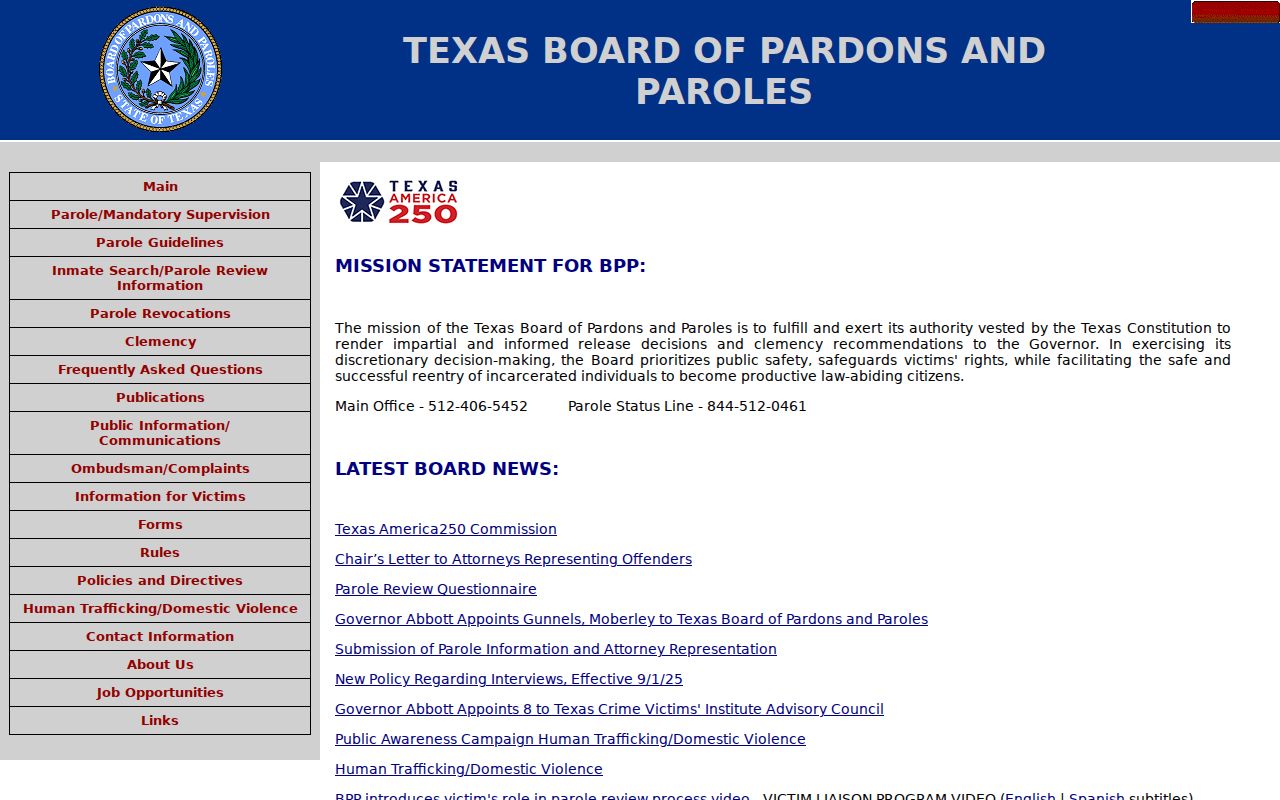
The board record is distinct from Falls County court orders and from the TDCJ locator used for custody or parole status.
City-by-City Criminal Records in Falls County
City agencies add a local layer to Falls County criminal records. Marlin and Rosebud police keep the reports they create, while their municipal courts hold ordinance and fine-only cases. Lott has no current police department, so present incident routes run through the Sheriff or another responding state agency. Higher charges and custodial bookings move into the county clerk and jail chain.
Marlin Record Check
Population 5,462 in 2020 · City police and municipal court records connect to the county-seat offices.
Rosebud Record Check
Population 1,296 in 2020 · Police requests and municipal court access begin at South College Street.
Lott Record Check
Population 694 in 2020 · Current incident records start with the Sheriff because Lott’s police department closed.
Falls County Criminal Records Context
Falls County had 17,869 estimated residents in 2025 across 765.50 square miles of land. Falls County’s rural scale helps explain why phone, mail, and counter service remain vital. A blank online result should not be called proof that no Falls County record exists. Official DPS crime data also should not be read as zero when a county row or agency submission is absent.
The Texas Uniform Crime Reporting program is the official state source for published crime data.
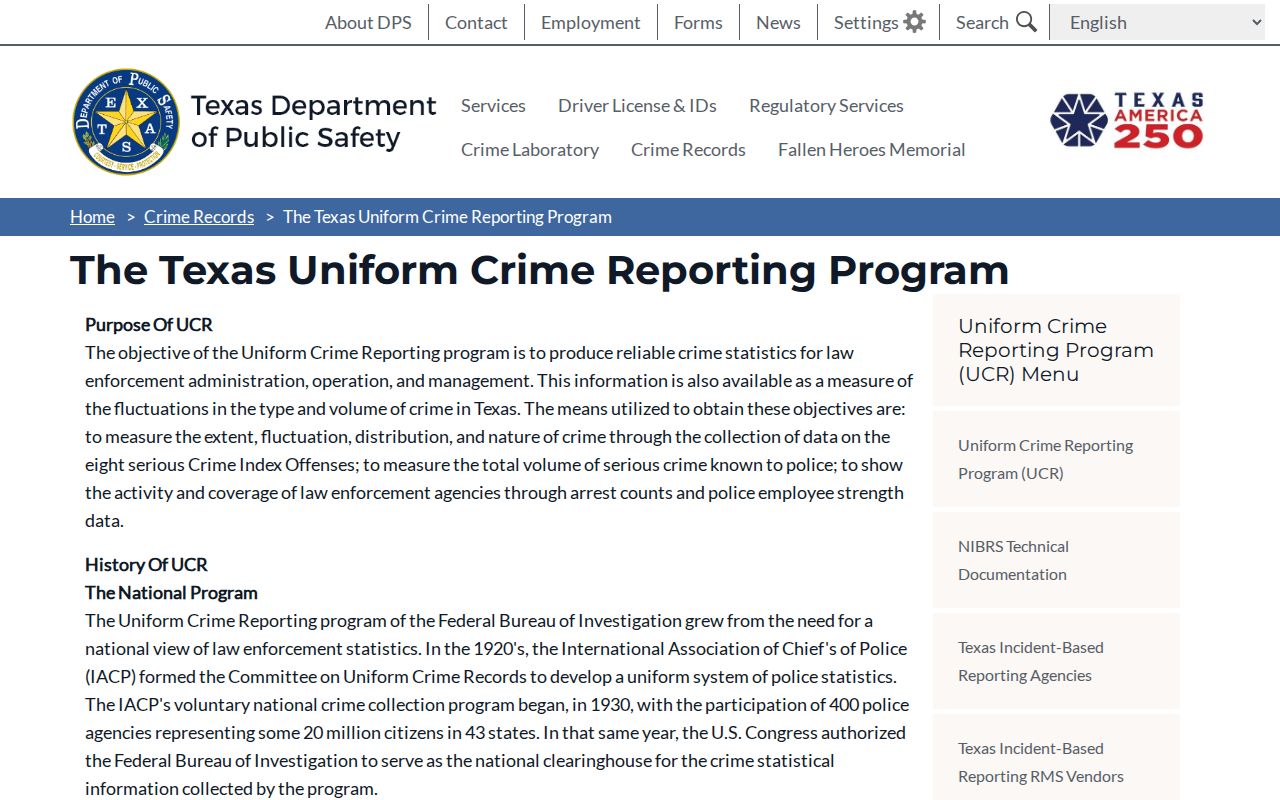
The program’s agency reporting framework gives context, but a missing count must never be turned into a claim of no crime.
Physical routing is unusually clear in Marlin. The restored Art Moderne courthouse places the County Clerk on the second floor and the District Clerk on the third, while the jail and sheriff remain on Highway 6. Start with the record type, use the named custodian, and verify the final detail in the originating Falls County document.